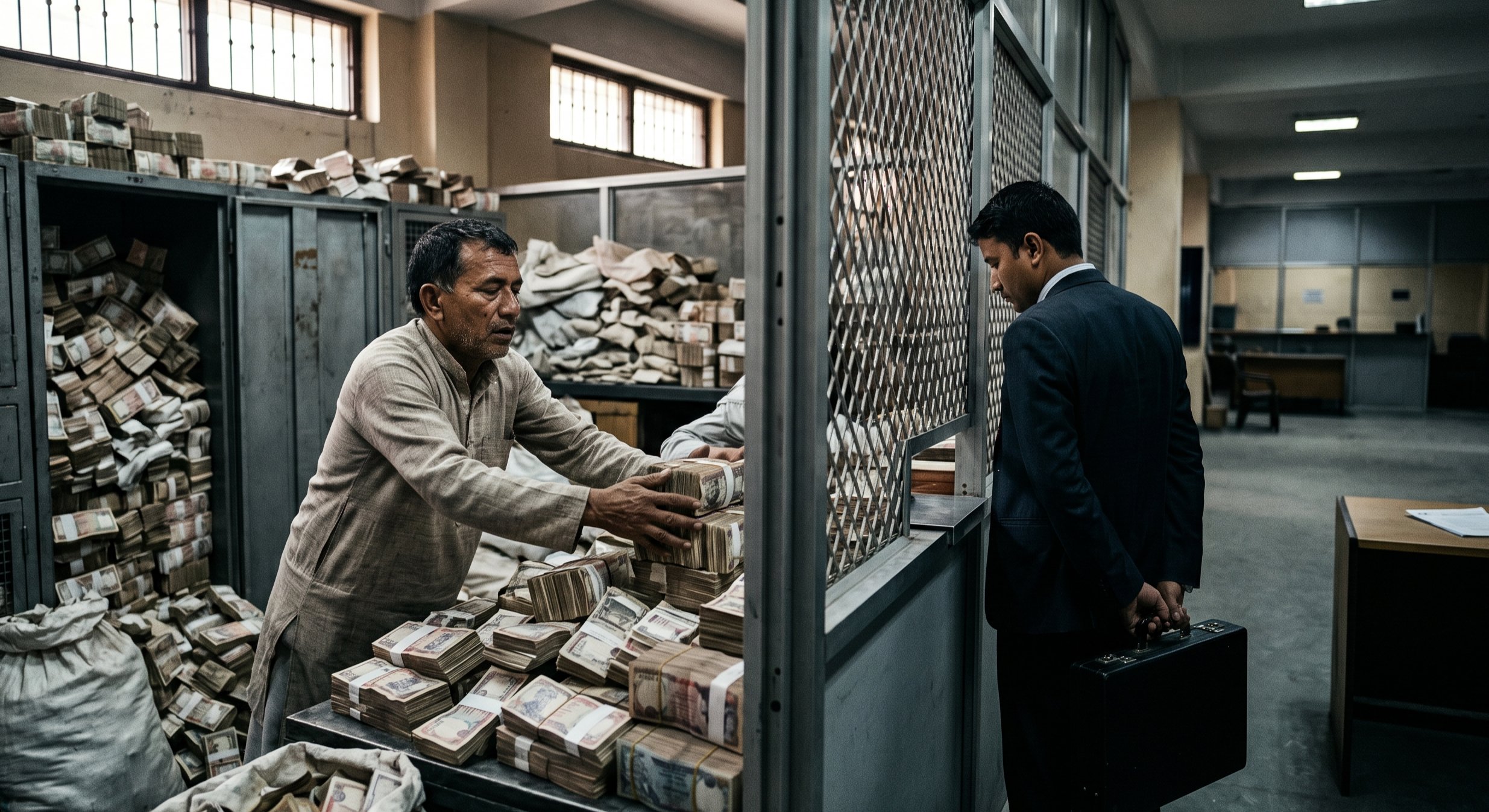
KATHMANDU — Nepal’s business owners have spent months asking for cheaper bank loans to survive a tough economy. Today, they have exactly that, but a new problem has emerged. Banks have too much cash, and nobody seems to want to borrow it.
To handle this growing imbalance, Nepal Rastra Bank (NRB) stepped in on Friday, May 22, 2026, to pull Rs 100 billion out of the country’s banking system. The central bank used a financial tool called a deposit collection instrument to lock this cash away for a 61-day maturity period. Bidding closed at 3:00 PM on Friday, and the money will remain out of active circulation until it is repaid with interest on July 21, 2026.
This dramatic intervention follows a similar Rs 40 billion drain earlier in May. These moves tell us something important about our economy. While commercial banks are richer than ever, local businesses are too worried about the future to take on new loans.
Where is All This Money Coming From?
Two big factors have created this massive pile of cash in our banking system as of late May 2026:
- Record Remittances: Money sent home by migrant workers abroad is hitting historic highs. This cash goes directly into local bank accounts every single month.
- Slow Loan Growth: At the same time, private sector credit growth, which is the rate at which businesses take out new loans, is stuck at a low 6.62%.
Simply put, money is flowing into bank vaults much faster than it is flowing out into the real economy.
Why Did the Central Bank Step In?
When banks have too much idle money, it creates a big problem. They start competing with each other to lend out cash, which crashes short-term interbank interest rates down close to zero percent.
By pulling Rs 100 billion out of active circulation for two months, the central bank is making sure interest rates stay stable.
How it works: Commercial banks electronically bid to store their extra cash with the central bank. The central bank pays them a low interest rate of around 3% to keep that money locked away and out of the market for a short time.
What This Means for You
1. Cheaper Business Loans
Because banks are desperate to give out loans, interest rates have dropped. If you want to expand your business, buy equipment, or restructure old debt, this is the cheapest time to borrow money in years.
2. A Boost for the Stock Market (NEPSE)
When banks pay very low interest on standard savings accounts, investors look elsewhere for profits. We are already seeing this extra money move into the Nepal Stock Exchange (NEPSE), which is driving up daily stock trading volumes ahead of the upcoming national budget announcement.
3. A Slow Economic Recovery
Despite the cheap money, many large businesses are holding back. They are worried about weak consumer demand and a widening trade deficit. Latest customs data shows Nepal still spends Rs 6.80 on imports for every Re 1 earned from exports.
Quick Takeaways
- The Problem: Banks hold over Rs 7.7 trillion in deposits, but local businesses are afraid to borrow due to low customer spending.
- The Fix: The central bank temporarily removed Rs 100 billion on May 22 to stabilize the financial system.
- The Opportunity: Loan interest rates are at their lowest point in years, making it a great time for business investment.
Looking Ahead
Nepal’s current money surplus shows a clear lack of business confidence. The banks are healthy and ready to lend, but business owners need to feel safe before they take on new debt.
All eyes are now on the upcoming national budget. If the government announces project spending or tax breaks that build confidence, businesses might finally start using this idle cash to grow the economy.