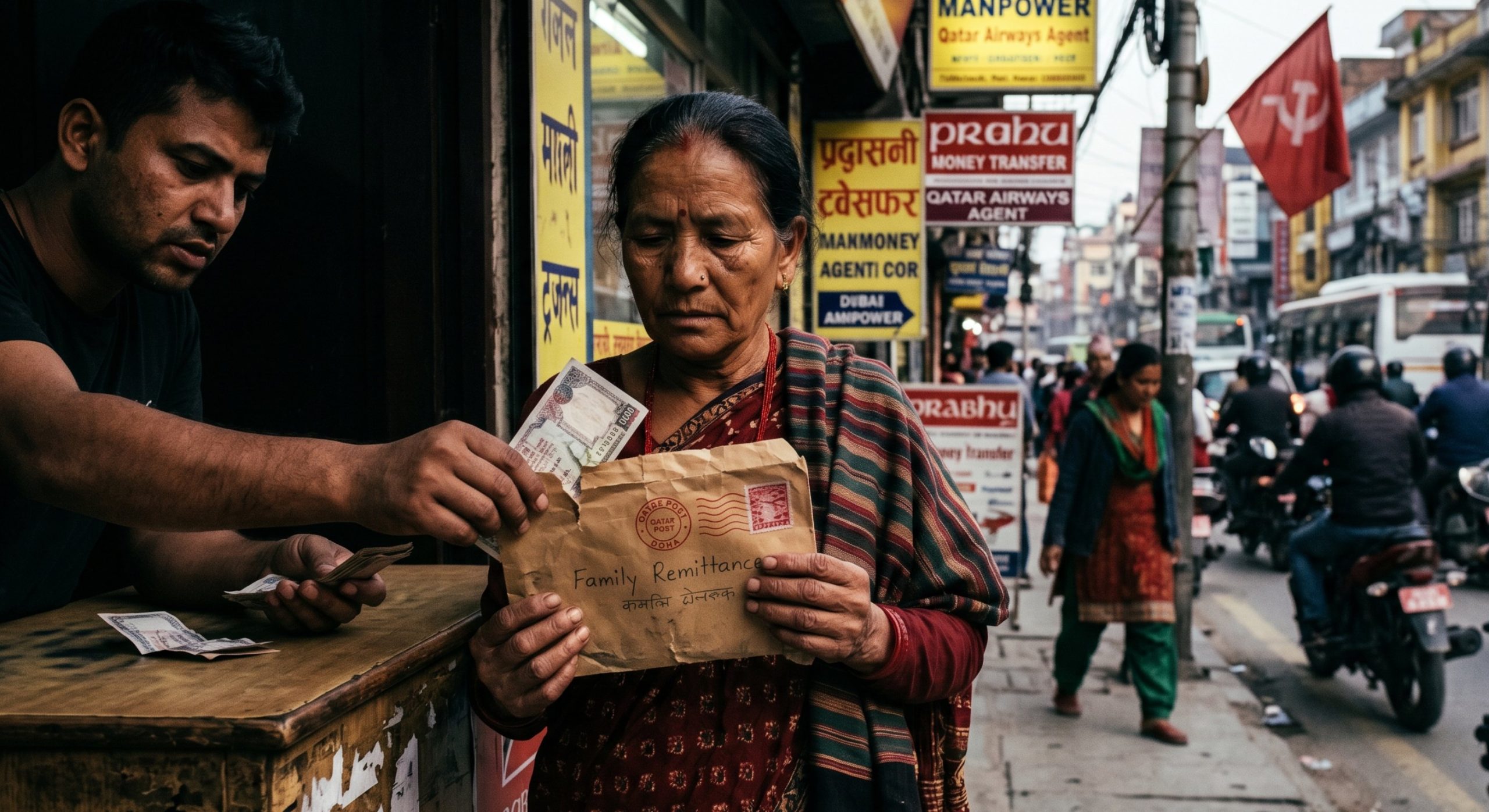
KATHMANDU — Escalating military and political tensions in Middle East have sent a wave of anxiety through Nepal’s financial architecture. Economists are warning that the country’s multi-billion dollar remittance inflows could face an abrupt slowdown. With nearly 40 percent of the national migrant workforce stationed across the Gulf region, any sustained regional conflict threatens to severely dent household consumption and throw macroeconomic indicators into reverse.
The warning comes at a highly delicate time for Nepal. Despite a strong post-election stability boost, the domestic market is wrestling with flat investment and weak private sector borrowing. The country relies heavily on cash sent home by workers abroad to cover its massive trade deficit, protection of this asset is hyper important.
A Double Threat to Foreign Reserves
Data from the Nepal Rastra Bank, the nation’s central bank, reveals the sheer scale of the vulnerability. In the nine months ending in mid-April, remittance inflows surged 39.1 percent to hit a massive Rs 1,659.41 billion. Out of this total, approximately Rs 61 billion enters the country every single month from the Gulf cooperation states alone.
A prolonged conflict puts these financial flows at serious risk. First, new labor migration opportunities could narrow drastically as Middle Eastern industries stall. Second, local employers may face operational shutdowns, forcing thousands of Nepali youths to return home prematurely. If these inflows drop by even 10 to 15 percent, the central bank’s record foreign exchange reserves, which currently cover over 18 months of imports, will begin a rapid, painful depletion.
“We are highly dependent on remittances to balance our economy. If the Middle East conflict expands significantly, it will squeeze national liquidity, raise global fuel prices, and drive up domestic inflation,” warns senior economist Dr. Gunakar Bhatta.
Supply Chains and Travel in Jeopardy
The geopolitical shock waves extend far beyond worker paychecks. Nepal imports 100 percent of its refined petroleum products from India, which imports nearly 40 percent of its crude through the sensitive Strait of Hormuz. Domestic fuel prices have fluctuated wildly as Brent crude crossed USD 100 per barrel, driving up transport fares and stalling domestic infrastructure projects due to shortages of critical raw inputs like bitumen.
Furthermore, Middle Eastern airlines carry nearly 29 percent of all passenger traffic through Kathmandu’s international airport. Flight cancellations during the peak spring travel season are already weighing down tourist numbers, cutting off another vital source of foreign currency.
The Core Vulnerabilities
- Consumption Shock: Over 23 percent of remittance money is spent straight on daily consumables. A drop in funds will instantly lower household spending.
- Banking Capital Strain: Banks are currently flush with liquidity because of incoming remittances. If that money dries up, deposit growth will plunge.
- Reintegration Hurdles: Local and provincial governments currently lack the employment infrastructure to absorb returning workers.
Looking Ahead
Nepal’s macroeconomic buffers are strong for now, but the domestic economy remains deeply fragile. The upcoming national budget on May 29 offers the government a timely platform to introduce structural adjustments. To build long-term economic resilience, state policies must urgently prioritize capital budget spending, relax rigid investment codes, and create genuine local jobs to reduce the country’s risky dependence on foreign labor markets.