New customs data shows the trade deficit widened to Rs 1.44 trillion in ten months and the gap between imports and exports keeps growing.
The numbers released by Nepal’s Department of Customs this week are striking in their consistency. Year after year, the same story: imports surge, exports creep upward slowly, and the gap between the two widens. The latest data, covering the first ten months of the current fiscal year, confirms the trend is accelerating.
Total foreign trade reached Rs 1.94 trillion, a 14.75% increase from the same period last year. That sounds like good news. It is not, because almost all of that growth came from imports. Nepal brought in Rs 1.692 trillion worth of foreign goods while exporting just Rs 248.96 billion. The resulting trade deficit stands at Rs 1.443 trillion, up nearly 15% from a year ago.
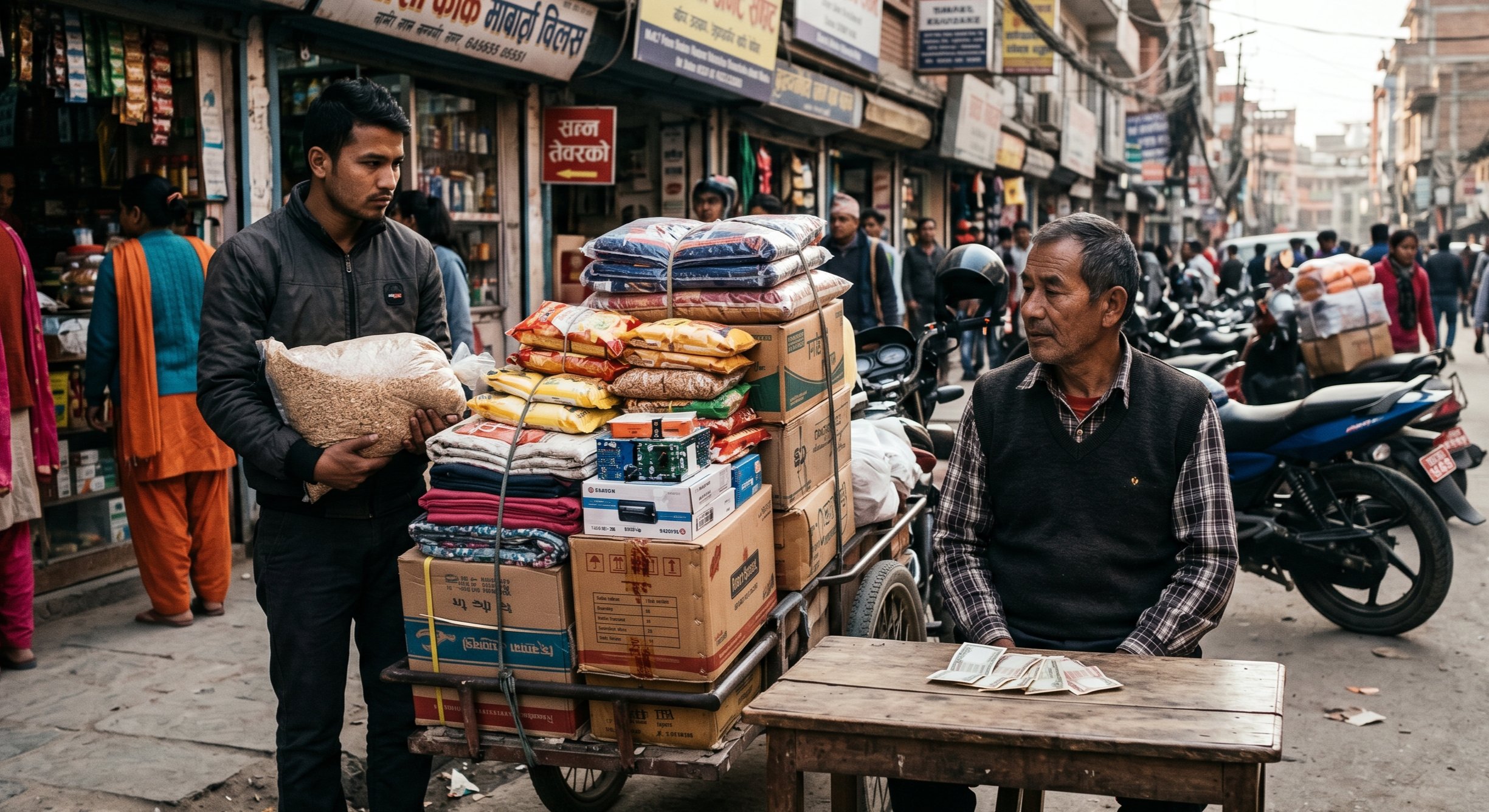
The import-to-export ratio is 6.80. That means for every single rupee Nepal earns from selling goods abroad, it spends Rs 6.80 buying foreign products. The ratio has barely moved in years. Nepal imports fuel, vehicles, electronics, machinery, medicines, and large quantities of consumer goods. Its exports are dominated by a narrow range of products, primarily palm oil re-exports, carpets, pashmina, and some agricultural goods; none of which have the scale or growth trajectory to meaningfully close the gap.
The consequences are felt most directly in Nepal’s foreign exchange reserves. The country depends heavily on remittances from Nepali workers abroad to fund its import habit. Those inflows have been resilient, but structurally tying national consumption to the labor migration of young people is not a development model that can last indefinitely.
Economists have pointed for years to Nepal’s failure to build an export-oriented manufacturing base. The country has cheap labor, reasonable access to regional markets through India and increasingly China, and hydropower potential that could supply affordable electricity to industry. What it has lacked is consistent policy, infrastructure, and investment to turn those advantages into exports. Until that changes, the trade deficit will remain a permanent feature of Nepal’s economic landscape.