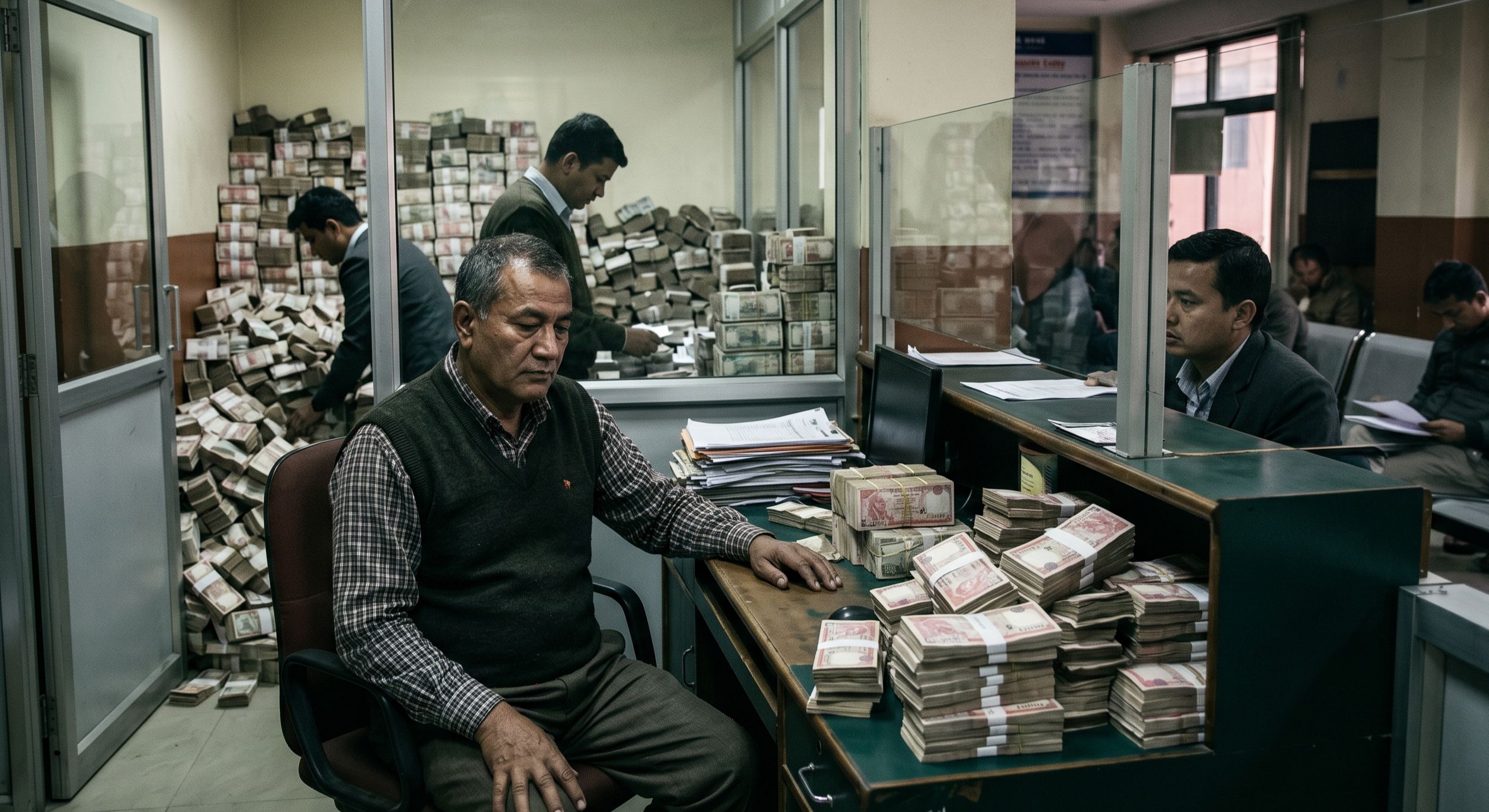
The central bank pulled Rs 100 billion out of the financial system this week — a sign that too much money is sitting idle while the economy moves slowly.
Nepal Rastra Bank made an unusual move this week. Rather than injecting money into the financial system to stimulate lending, the central bank did the opposite. It used a 61-day deposit collection instrument to absorb Rs 100 billion from commercial banks, effectively pulling a massive sum out of active circulation. The move is called a liquidity mop-up, and it reveals something important about where Nepal’s economy stands right now.
The banking sector is flush with loanable funds. Deposits have grown steadily, partly due to a rise in remittance inflows and cautious consumer saving. But businesses and households are not borrowing. Loan demand remains weak, which means money sits on bank balance sheets doing very little. When excess liquidity builds up like this, it pushes deposit rates down and creates distortions in the financial system. Banks, unable to deploy funds profitably, face pressure on margins. The economy, starved of productive investment, stagnates.
The numbers tell the story plainly. The weighted average deposit rate for Class A commercial banks has fallen to just 3.4%. The average lending rate sits at around 6.77%. The spread between these two rates — the room banks have to earn a profit — is shrinking. In better times, that gap reflects healthy intermediation. Right now it reflects a system where borrowers are scarce.
Why is credit demand so low? A combination of factors. Private sector confidence remains fragile after years of political and policy uncertainty. Interest rates, while lower than they were two years ago, may still feel high to businesses that are not seeing strong revenue growth. Some potential borrowers may also be waiting to see what the upcoming budget brings before committing to expansion plans.
The central bank’s intervention is meant to stabilize short-term rates and prevent excess liquidity from distorting the market further. But it does not solve the underlying problem. For Nepal’s banking sector to function at full capacity, the economy needs to generate enough activity that businesses and entrepreneurs actually want to borrow.